Selling Company Assets in Thailand: VAT, Specific Business Tax and the Gain
Cars and machinery carry VAT; land and buildings carry 3.3% specific business tax, 1% withholding and a transfer fee. The tax base for each, the gain on sale, and a worked example before you set a price.
In this article
Companies sell business assets for ordinary reasons: a new car replaces the old one, an outdated machine goes, or the office moves and the old building is put up for sale. Owners tend to focus on the price, but the tax depends heavily on what is being sold. Cars and machinery carry value added tax (VAT) if the company is VAT-registered. Land and buildings carry specific business tax, a withholding tax and a transfer fee, all due on the day of registration at the land office.
This article sorts out which tax applies to which asset, what base each tax uses, how the gain flows into corporate income tax, and what to check before you agree on a price. It includes a worked example with real numbers.
The overview: what you sell decides the tax
| Asset | Tax at the sale | Tax base | Gain on sale |
|---|---|---|---|
| Cars, machinery, equipment, furniture | VAT 7% (VAT-registered companies only) | Sale price, or market price if sold below market | Included in net profit for corporate income tax |
| Land and buildings used in the business | Specific business tax 3.3%, withholding tax 1%, transfer fee 2% (no VAT) | Sale price or official appraised value, whichever is higher (the transfer fee uses the appraised value) | Included in net profit for corporate income tax |
The taxes in this table arise on the day of sale. Corporate income tax on the gain joins the rest of the year's profit and is filed on the PND.50 annual return.
Selling cars, machinery and equipment: VAT
Section 77/1 of the Revenue Code defines a "sale" as any disposal or transfer of goods, with or without consideration, and "goods" as any tangible or intangible property that has a value. Section 77/2 makes a sale of goods by a business operator subject to VAT. So when a VAT-registered company sells a used car or machine, it is selling goods: it issues a tax invoice, charges VAT to the buyer and reports the output tax on that month's PP.30 return.
The current rate is 7% including local tax, a temporary reduction from the statutory 10%. The latest royal decree extends it to September 30, 2027. If your sale falls near that date, check for a newer announcement.
Three points often cause confusion:
- Passenger cars. When the company bought a passenger car or van with no more than 10 seats, the input VAT was non-creditable under Section 82/5(6). That rule is about the right to claim input tax at purchase. At the sale, the transaction is still a sale of goods under Section 77/2. If your case is unclear, ask your local Revenue office before you issue documents.
- Assets used only in a VAT-exempt business. In ruling Kor Kor 0702/Por./4939 (July 7, 2010), the Revenue Department told a freight transport company, whose service is VAT-exempt under Section 81(1)(n), that if it used its trailers only in that transport business, it need not charge VAT when it sold them.
- Selling below market value. Section 79/3(1) uses the market price as the VAT base when goods are sold for no consideration or below market price. Selling a car cheaply to a director or employee can lead to VAT assessed on the market price.
A company that is not VAT-registered does not charge VAT on its asset sales, but the gain still goes into net profit as usual.
Selling land and buildings: specific business tax and the land office bill
Section 4(5) of Royal Decree No. 342 (1998) treats the sale of immovable property that a juristic person holds for its business as a sale for trade or profit, which is subject to specific business tax under Section 91/2(6) of the Revenue Code. The familiar five-year holding rule covers other cases. A company that sells the office or factory it has used for ten years still pays specific business tax (more detail in our article on specific business tax and stamp duty).
Section 77/3 says that a business subject to specific business tax is outside the VAT system. A sale of land and buildings therefore carries no VAT, even when the company is VAT-registered.
Four items come up on the day of transfer:
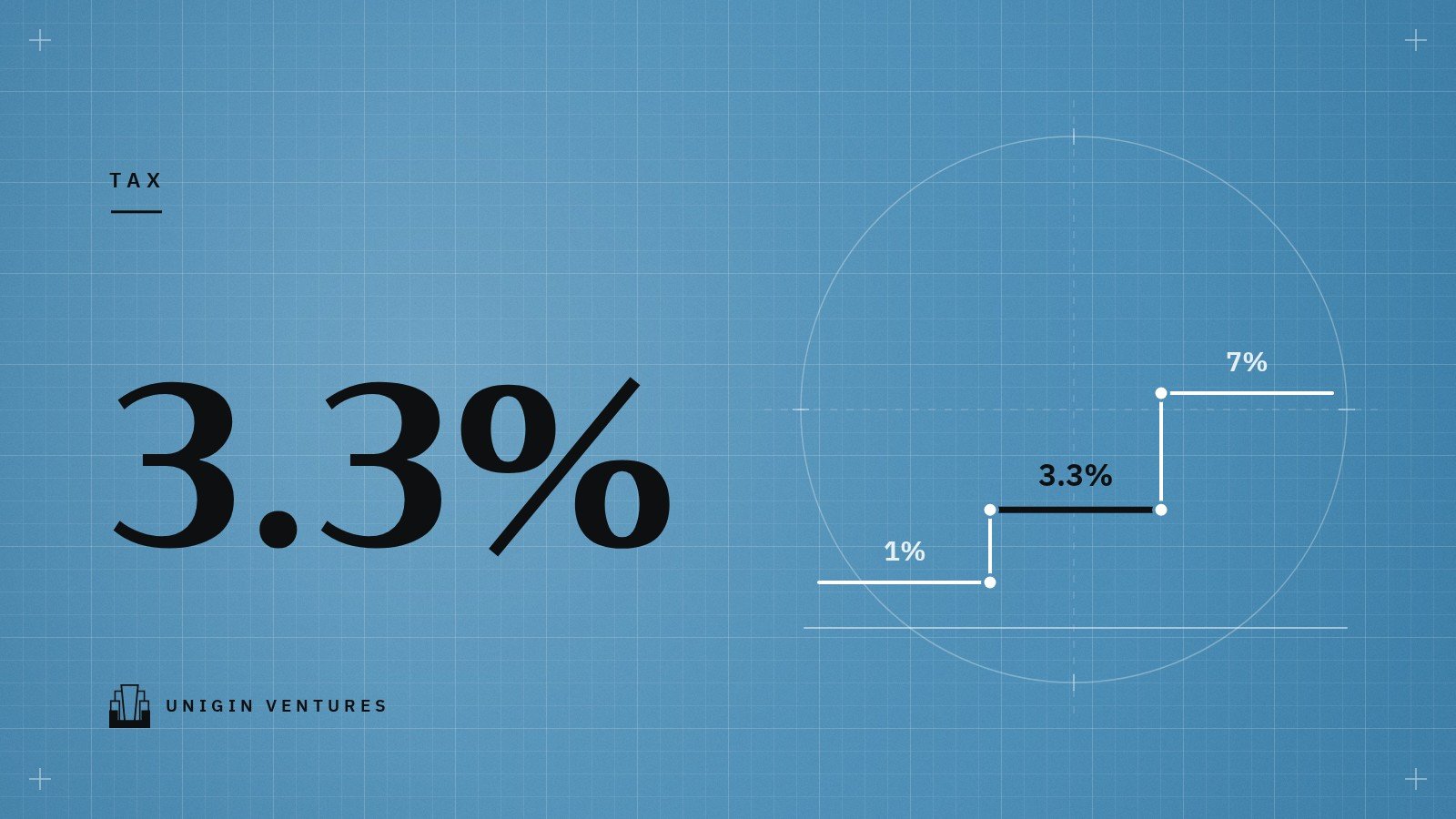
- Specific business tax of 3%, plus a local tax of 10% of that amount, for 3.3% in total. The base is the sale price or the official appraised value used for registration fees, whichever is higher. It is paid to the land officer at registration (Section 91/10).
- Withholding tax of 1% under Section 69 tri. The buyer withholds it from the payment to the selling company and remits it at the land office. The base is the sale price or the appraised value, whichever is higher. This is not an extra cost: the seller credits it against its corporate income tax for the year.
- Transfer registration fee of 2% of the appraised value (Department of Lands). Who pays it depends on the sale agreement.
- Stamp duty of 0.5%, which is waived once specific business tax is paid.
Worked example: a machine and an office building
Illustrative example: a VAT-registered company moves to an industrial estate and sells two of its old assets in the same year.
The machine
Cost 2,000,000 baht, used for three years, depreciated at 20% a year: accumulated depreciation 1,200,000 baht, remaining value 800,000 baht.
Sold for 1,000,000 baht plus 7% VAT of 70,000 baht. The buyer pays 1,070,000 baht.
Gain on sale = 1,000,000 − 800,000 = 200,000 baht.
The 70,000 baht of VAT is not company income. It is output tax that goes to the Revenue Department through PP.30.
The office building and its land
Building cost 6,000,000 baht, depreciated at 5% a year for ten years: accumulated 3,000,000 baht, remaining value 3,000,000 baht. Land cost 4,000,000 baht (land is not depreciated).
Sold for 12,000,000 baht; appraised value 10,000,000 baht. The base for specific business tax and withholding tax is therefore 12,000,000 baht.
Specific business tax 3% = 360,000 baht; local tax 10% = 36,000 baht; total 396,000 baht.
Withholding tax 1% = 120,000 baht (creditable against corporate income tax).
Transfer fee 2% × 10,000,000 = 200,000 baht.
Gain on sale = 12,000,000 − (3,000,000 + 4,000,000) = 5,000,000 baht.
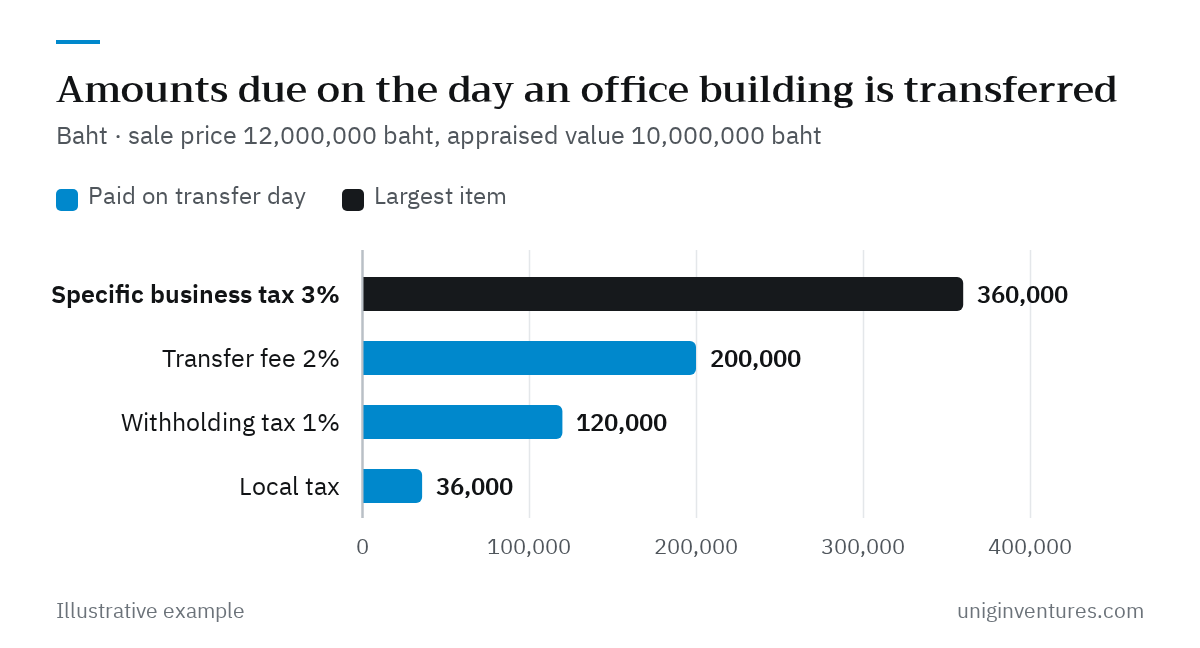
Had the same building sold for only 9,000,000 baht, below its appraised value, the base for specific business tax and withholding tax would still be 10,000,000 baht, and specific business tax with local tax would come to 330,000 baht. A lower price does not push the transfer-day taxes below the appraised value.
The gain and corporate income tax
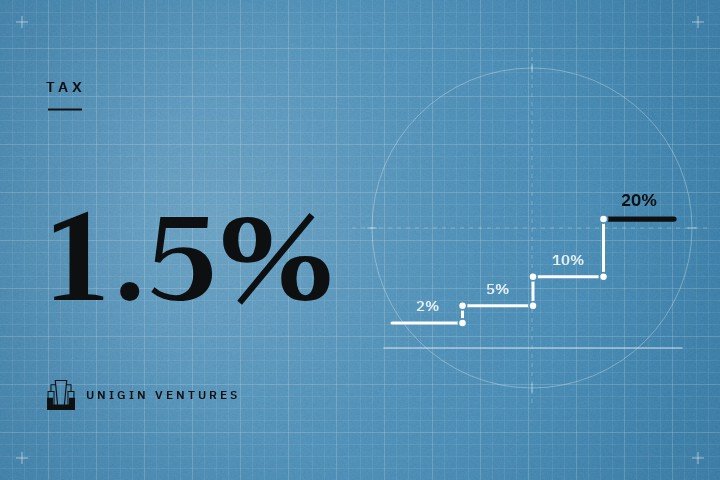
The gain on an asset sale is the sale price minus the asset's remaining tax value. In this example the two gains total 5,200,000 baht and join the year's operating profit. For a company taxed at a flat 20% of net profit, that adds about 1,040,000 baht of tax before selling costs. Companies that meet the SME conditions use the stepped rates in the Revenue Department's SME guide. Specific business tax is not on the list of non-deductible items in Section 65 ter(6).
Check three things before you settle the numbers:
- Tax value may differ from book value. If your accounting depreciation rates differ from the ones used for tax, the accounting gain and the taxable gain will differ too (see our article on book and tax depreciation).
- Sales to directors, shareholders or group companies. Section 65 bis(4) lets the assessment officer use the market price when property is transferred for no consideration or below market price without reasonable cause. Keep evidence of value, such as quotes from other buyers or a valuation report (see our article on related-party transactions).
- Sales in the first half of the year. Include the gain in your PND.51 half-year profit estimate so the estimate is not too low (see our article on PND.51).
What to do before you agree to sell
- Pull the fixed asset register. Find the cost, accumulated tax depreciation and remaining value of each asset you plan to sell.
- Classify each item. Separate movable assets that carry VAT from land and buildings that carry specific business tax. If they are sold together, split the price in the contract.
- Get the appraised value from the land office or the Department of Lands' system, and compute the taxes on the higher figure.
- Write down who pays what in the contract: transfer fee, specific business tax, and whether the price includes VAT.
- Work out the net cash you will receive after transfer-day taxes, withholding tax and the extra corporate income tax, before you decide whether the offer is worth taking.
- Keep evidence of market value, especially when the buyer is an insider or a related company.
Selling property that is not used in the business, such as land held idle, follows different specific business tax conditions, and transferring an entire business to another company has its own rules. In those cases, talk to your accountant or the Revenue Department first.
This article is general information, not tax advice for a specific case. Law as of November 2026.
Sources
- Revenue Code Sections 77–79 (Sections 77/1, 77/2, 77/3 and 79/3) — Revenue Department
- Revenue Code Sections 80–82 (Sections 81 and 82/5) — Revenue Department
- Ruling Kor Kor 0702/Por./4939 on selling assets used in a VAT-exempt business — Revenue Department
- Royal decrees under the Revenue Code (including the VAT rate reduction extended to September 30, 2027) — Revenue Department
- Revenue Code Chapter 5, specific business tax (Sections 91/2, 91/5, 91/6 and 91/10) — Revenue Department
- Royal Decree No. 342 (1998) on sales of immovable property for trade or profit — Revenue Department
- Calculating specific business tax on sales of immovable property — Revenue Department
- Corporate income tax on sales of immovable property — Revenue Department
- Revenue Code Sections 65–76 (Sections 65 bis(4), 65 ter(6) and 69 tri) — Revenue Department
- Corporate income tax guide for SMEs — Revenue Department
- Fees, taxes and duties for land registration — Department of Lands