Thai SME Tax Essentials: Corporate Income Tax, VAT and Withholding Tax
A plain-language guide to the three taxes almost every Thai SME deals with: reduced corporate income tax for SMEs, when to register for VAT, and how withholding tax works, with a filing calendar.
In this article
Most small and medium-sized businesses in Thailand deal with the same three taxes: corporate income tax on profits, value added tax (VAT) on sales, and withholding tax on many of the payments they make. Getting them right is not only about avoiding penalties. Clean tax filings are also one of the first things lenders and investors check. This guide covers the essentials for a Thai limited company.
1. Corporate income tax: SMEs pay less on their first 3 million baht
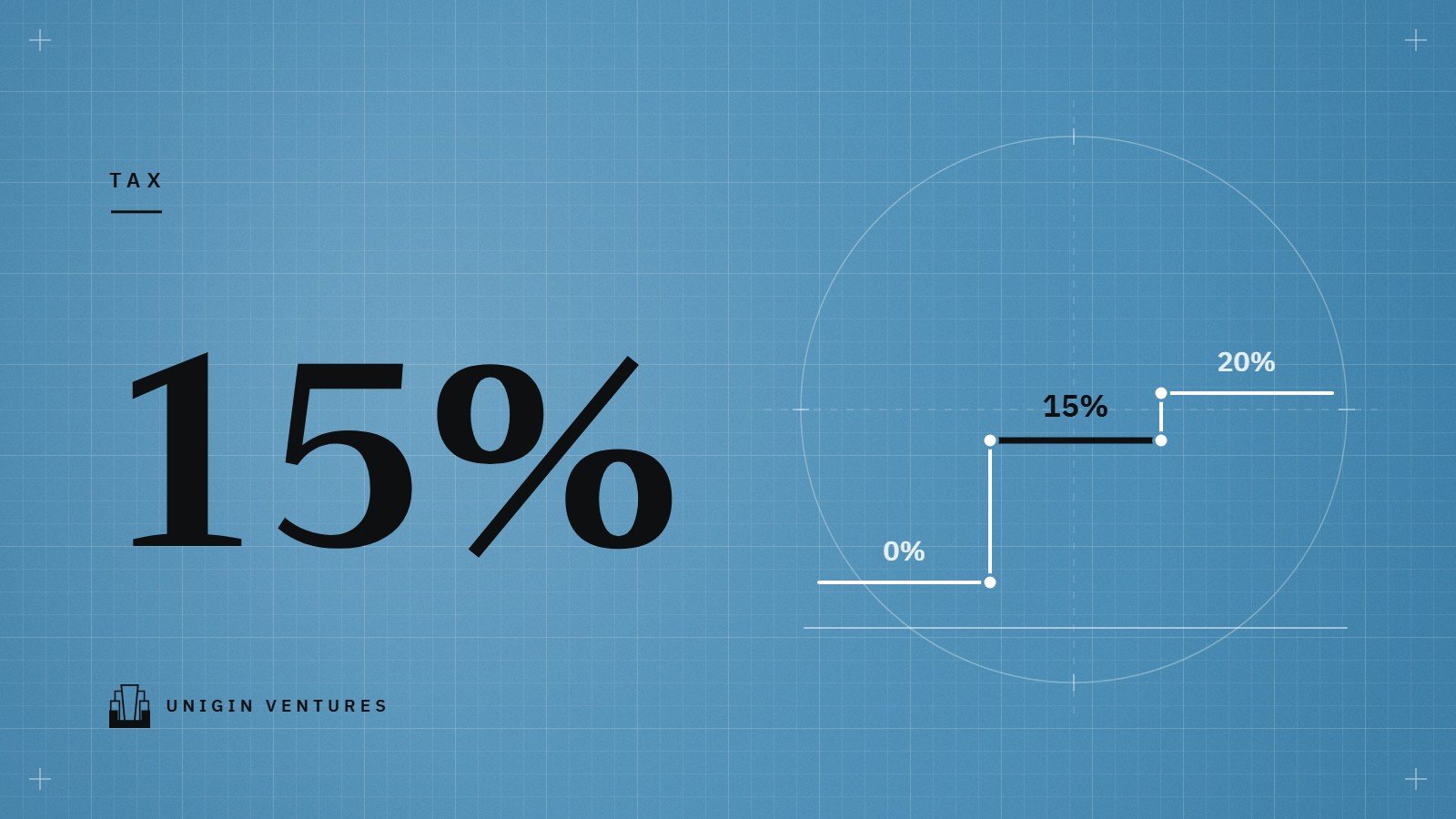
The standard corporate income tax rate is 20% of net profit. Companies that qualify as SMEs pay reduced rates. A company qualifies if its paid-up capital is no more than 5 million baht at the end of the accounting period and its revenue from selling goods and providing services is no more than 30 million baht in that period.
| Net profit (baht) | SME rate |
|---|---|
| 0 – 300,000 | Exempt |
| 300,001 – 3,000,000 | 15% |
| Above 3,000,000 | 20% |
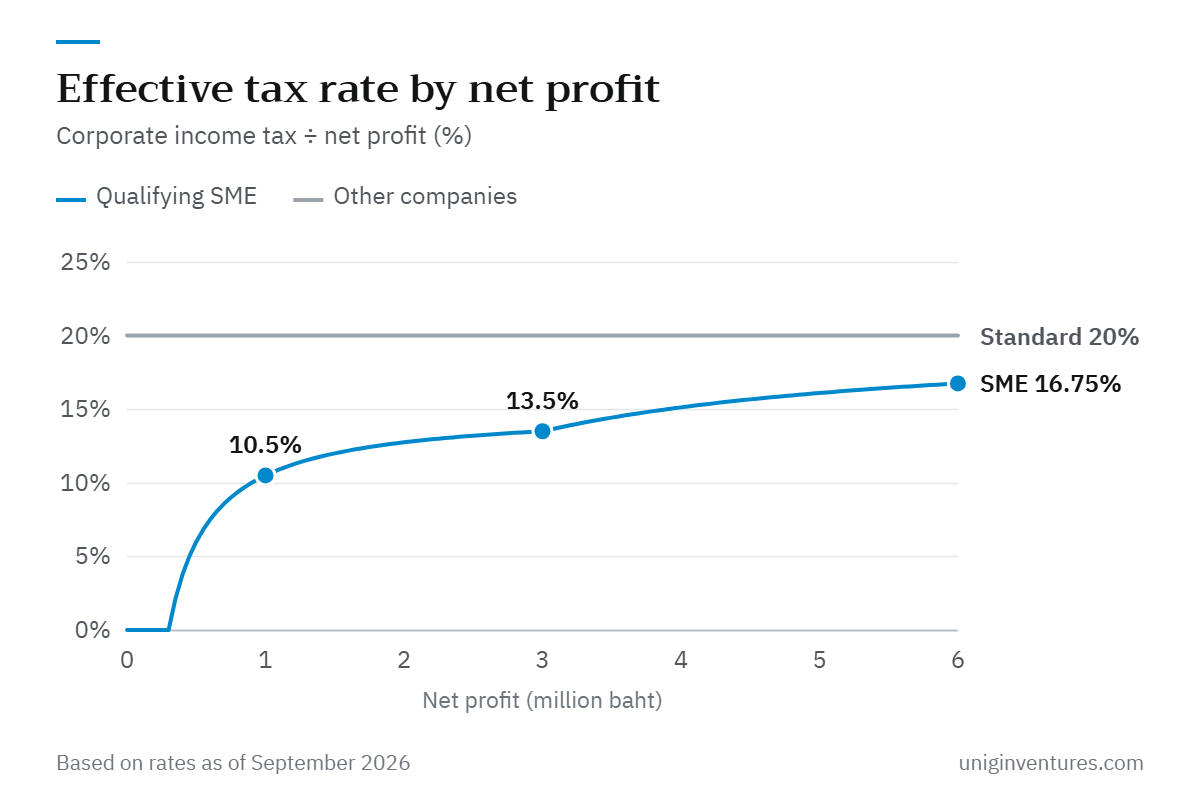
For a company with a net profit of 1 million baht, the tax is (1,000,000 − 300,000) × 15% = 105,000 baht, an effective rate of 10.5%. A company that does not qualify pays 200,000 baht on the same profit. The advantage narrows as profit grows, because everything above 3 million baht is taxed at 20%.
Two points often surprise first-time owners:
- Tax is calculated on taxable profit, not accounting profit. Some expenses cannot be deducted and are added back, for example entertainment costs above the permitted limit, fines and penalties, and expenses without proper supporting documents.
- You file twice a year. The half-year return (PND.51) is due within two months after the first six months of the accounting period and is based on an estimate of the full year's profit. Underestimating by more than 25% without good reason can lead to a surcharge of 20% of the tax shortfall. The annual return (PND.50) is due within 150 days after the end of the accounting period.
2. VAT: register once revenue passes 1.8 million baht a year
A business must register for VAT within 30 days of its annual revenue exceeding 1.8 million baht. The rate charged today is 7%. The law sets the rate at 10%, but a royal decree has kept the lower rate in place and has been renewed many times, so keep an eye on announcements.
VAT works as a chain. You charge output tax on your sales and pay input tax on your purchases, and each month you pay the difference to the Revenue Department, or carry a credit forward if input tax was higher. A few rules matter in practice:
- File the monthly VAT return (PP.30) by the 15th of the following month, even in a month with no sales.
- Issue a full tax invoice with the required details for every sale to a VAT-registered customer.
- Input tax can be claimed only with a valid tax invoice, generally within six months of the invoice date.
- Some goods and services are exempt from VAT, so check before charging or registering.
If most of your customers are VAT-registered businesses, registering before you reach the threshold can make sense, because they can claim back the VAT you charge and you can reclaim the VAT on your own costs.
3. Withholding tax: tax collected when you pay
When a company pays for services, rent and certain other items, it must withhold part of the payment as tax, pay it to the Revenue Department, and give the payee a withholding tax certificate, commonly called a "50 Tawi". The payee then uses the certificate as a credit against their own income tax. Common rates:
| Payment | Rate |
|---|---|
| Services and hire of work | 3% |
| Professional fees | 3% |
| Rent | 5% |
| Advertising | 2% |
| Transport | 1% |
| Dividends | 10% |
Tax withheld from payments to individuals is filed on PND.3, and from payments to companies on PND.53, both by the 7th of the following month for paper filing. Tax withheld from salaries is filed monthly on PND.1, with an annual summary, PND.1 Kor, due by the end of February. On the receiving side, keep every 50 Tawi certificate your customers give you, because each one reduces the tax you pay at year end.
A filing calendar
| What | Form | Deadline (paper filing) |
|---|---|---|
| Withholding tax on salaries | PND.1 | 7th of the following month |
| Withholding tax on payments to individuals | PND.3 | 7th of the following month |
| Withholding tax on payments to companies | PND.53 | 7th of the following month |
| VAT | PP.30 | 15th of the following month |
| Social security contributions | SPS.1-10 | 15th of the following month |
| Half-year corporate income tax | PND.51 | Within 2 months after the first half of the accounting period |
| Annual corporate income tax | PND.50 | Within 150 days after the end of the accounting period |
| Annual summary of salary withholding | PND.1 Kor | End of February of the following year |
Filing online through the Revenue Department's e-Filing system usually gives extra days on the monthly tax deadlines, under the Department's current announcement.
Sole proprietor or company?
Many businesses start as sole proprietors, who pay personal income tax at progressive rates from 5% up to 35% on net taxable income above 5 million baht a year. As profits grow, a limited company can pay less tax under the SME rates and looks more credible to customers, banks and investors. It also brings audited accounts and more paperwork. The right moment depends on your profit, your costs and your plans, so it is worth modelling with an accountant.
Good habits
- Reconcile VAT and withholding tax every month as part of your monthly close, not at year end.
- File and pay online, and keep the receipts.
- Keep accounting documents for at least five years, as the law requires.
- Consider e-Tax Invoice and e-Receipt, which make documents easier to issue and keep.
- Talk to a tax adviser before large or unusual transactions, not after.
Rules and rates change from time to time. This article reflects the rules as of September 2026. Check the Revenue Department's website or ask a tax adviser before relying on a specific figure.